AI Wars
How a 44-year surveillance pipeline reached the frontier of artificial intelligence — and what the chaos actually means.
The Chain
The Pentagon calls it a threat to national security.
The Pentagon also can't stop using it.
On February 27, 2026, the President of the United States designated Anthropic — the company behind Claude, one of the world's most capable artificial intelligence systems — as a “supply-chain risk to national security.” The ban was immediate. All federal agencies were ordered to stop using Anthropic's technology.
Hours later, the United States military used Claude to coordinate airstrikes against Iran.

How did we get here? How did the same AI that a sitting President calls a national security threat become the thing his military can't wage war without?
The answer is a pipeline. It starts in 1982, with stolen software.
PROMIS
In the early 1980s, a small Washington, D.C. company called INSLAW developed a database system for the Department of Justice called PROMIS — the Prosecutor's Management Information System. It was designed to track criminal cases across federal courts.
The DOJ took it. Not metaphorically. A federal court ruled that the Department of Justice “took, converted, and stole” PROMIS through rigged bankruptcy proceedings.
What happened next turned a stolen database into one of the most consequential intelligence operations of the 20th century. We know this because one journalist traced the entire network — and died for it.
Danny Casolaro was a freelance investigative journalist who spent the last year of his life mapping what he called “The Octopus” — a web connecting the PROMIS theft to the CIA, BCCI, Iran-Contra, and organized crime. He traced how the stolen software had been backdoored and distributed to intelligence services worldwide, and how the same network of operatives appeared at every node.
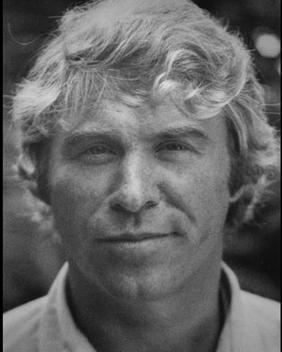
On August 10, 1991, Casolaro was found dead in a bathtub at the Sheraton Hotel in Martinsburg, West Virginia. His wrists had been slashed at least ten times. His research notes and the manuscript he was carrying were never recovered from the room. His death was ruled a suicide.
He had told friends and family: “If anything happens to me, don't believe it was accidental.”
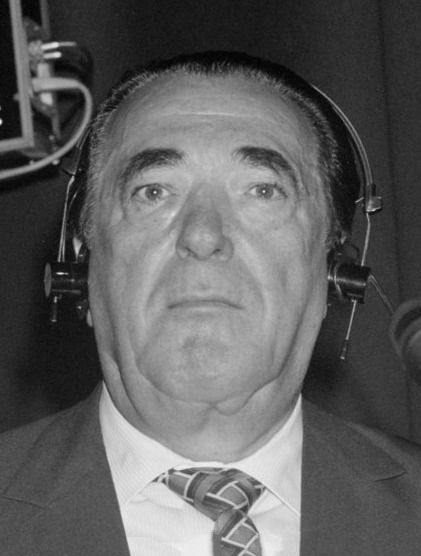
While Casolaro mapped the network from the outside, one of the men at its center was Robert Maxwell — a Czech-born British media baron who controlled Mirror Group Newspapers, Pergamon Press, and Macmillan Publishing. His empire spanned publishing, technology, and defense, with offices in every major capital and relationships with governments on both sides of the Iron Curtain.
According to Ari Ben-Menashe, a former officer in Israeli Military Intelligence, Maxwell had operated as a long-standing Mossad asset under the direction of Rafi Eitan — the same Israeli intelligence officer who ran the Jonathan Pollard spy ring inside the U.S. Navy. Maxwell’s role was specific: use his global publishing and technology infrastructure to place backdoored copies of PROMIS into foreign intelligence agencies, banking systems, and government networks worldwide.
Through Maxwell, modified copies of PROMIS were sold or placed into systems across the Soviet bloc, China, South Africa, Guatemala, Colombia, and dozens of other countries. Every copy contained the same hidden backdoor — feeding intercepted data back to Israeli intelligence, and through parallel arrangements, to the CIA. It was the largest signals intelligence penetration operation of the Cold War, and it ran through a publishing house.
On November 5, 1991 — three months after Casolaro’s body was found in Martinsburg — Robert Maxwell was found floating in the Atlantic Ocean near the Canary Islands. He had gone overboard from his yacht, the Lady Ghislaine, named for his youngest daughter. His death was ruled accidental drowning. Three separate insurance companies later contested the finding.
Two deaths. Two men at the center of the PROMIS story. Three months apart.
When Maxwell died, the Israeli government revealed what his obituaries could not. They gave him a state funeral on the Mount of Olives — Jerusalem’s most sacred burial ground, reserved for prophets and national heroes. Six serving and former heads of Israeli intelligence attended. Prime Minister Yitzhak Shamir declared: “He has done more for Israel than can today be said.”
Robert Maxwell's death did not end the operation. It passed to the next generation.
Ghislaine Maxwell, Robert's youngest daughter, became the primary associate of Jeffrey Epstein. An October 2020 FBI Counterintelligence Section memo identified Epstein as a “co-opted intelligence asset” who had been “richly intelligence-connected” through the Maxwell family's Mossad ties. Ehud Barak — former Israeli Prime Minister and head of military intelligence — was photographed entering Epstein's New York residence and received $2 million from the Wexner Foundation for vague “research.”

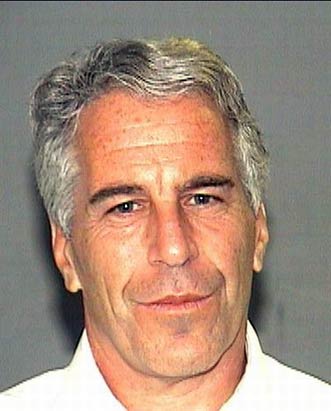
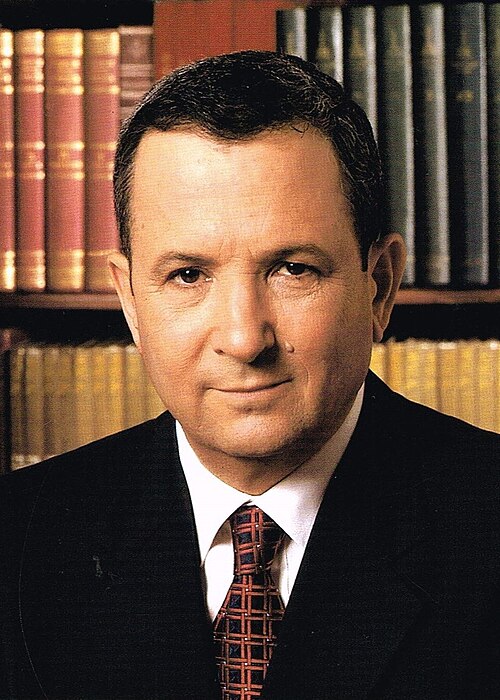
Epstein invested $1.5 million in Carbyne — an emergency call-handling technology company founded by former Israeli intelligence Unit 8200 operatives. Carbyne's technology extracts location, video, and audio data from any phone calling an equipped 911 center. The company's board included Ehud Barak and former Palantir executives.
Journalist killed → stolen software → Mossad distributor → his daughter → intelligence asset → Israeli military intelligence → Unit 8200 surveillance company → Pentagon AI contractor.
The stolen software was also implanted into the American banking system through Systematics, a company controlled by Jackson Stephens and connected to the NSA. The Rose Law Firm — where Hillary Clinton was a partner — represented both Systematics and BCCI, the CIA-owned bank that laundered over $15 billion before its collapse.
Christine Maxwell, another of Robert's daughters, later co-founded Chiliad, an analytics company whose chief technology officer became the CIA's Chief Information Officer.
Main Core
In 1983, Oliver North — then a National Security Council aide who would later be convicted of five felonies for his role in Iran-Contra — used stolen PROMIS technology to build something called Main Core.
Main Core is a domestic targeting database. According to investigative reports, it contains a list of Americans considered “unfriendly” to the continuity of government. It was seen at the White House after September 11, 2001.

Total Information Awareness
In 2002, the Defense Advanced Research Projects Agency — DARPA — launched Total Information Awareness. Its logo was literally an all-seeing eye watching the globe.
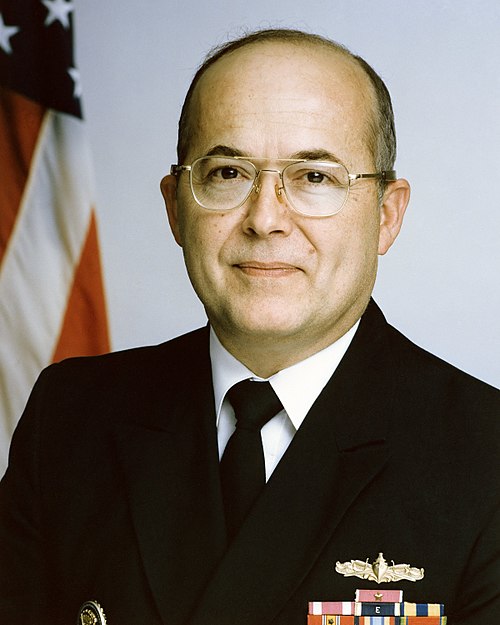
TIA was directed by John Poindexter, who had been convicted of five felonies for his role in Iran-Contra. He was given control of a program designed to collect and analyze the communications, financial transactions, and travel records of every person in the United States.

Congress defunded it in 2003 after public outcry. The official line was that it was shut down.
It was never shut down. The capabilities were distributed under different program names across the intelligence community.
Palantir
In May 2003 — the same month TIA was officially renamed and Congress began defunding it — Peter Thiel incorporated Palantir Technologies.
Richard Perle, a member of the Defense Policy Board, introduced Thiel and Palantir co-founder Alex Karp to John Poindexter — the same man who had just run TIA.
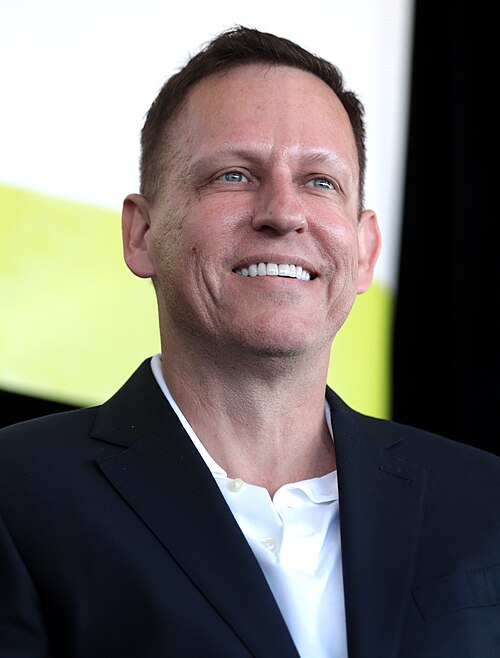

In-Q-Tel, the CIA's venture capital arm, was Palantir's first investor. The CIA was Palantir's sole client from 2003 to 2008. Approximately 200 Palantir engineers made trips to CIA headquarters at Langley.
Maven
In 2017, the Pentagon launched Project Maven — its primary artificial intelligence program for analyzing surveillance data and generating military intelligence. Palantir's Maven Smart System became the backbone of this effort.
In March 2026, a Deputy Secretary of Defense memo stated Maven would become “a cornerstone of U.S. defense strategy across all military branches.”
The Pentagon's 2026 budget included a record $13.4 billion for AI. The U.S. Army's $10 billion “Enterprise Service Agreement” with Palantir consolidates 75 previously separate data and software contracts into a single contract.
Claude
And now the chain is complete.
Stolen DOJ software → Domestic targeting database → Mass surveillance program → CIA-funded private company → Pentagon AI platform → Frontier AI selecting bombing targets.
Forty-four years. The same capabilities. The same personnel networks. Each time: public outrage, official shutdown, private resurrection.
The Pattern
Program Shutdown → Private Resurrection
This is not an isolated chain. It is a pattern.
On February 4, 2004, DARPA shut down a program called LifeLog. Its purpose was to create a comprehensive digital record of a person's life — everything they see, do, read, and communicate.
The same day — February 4, 2004 — Mark Zuckerberg launched Facebook.


Sean Parker, Facebook's first president, was recruited by the CIA at age 16 according to public reporting. ACCEL Partners, which invested $12.7 million in Facebook's first venture round, had a managing partner who sat on In-Q-Tel's board.
The pattern repeats with mathematical regularity:
In-Q-Tel has launched over 800+ companies in 26 years. Its net assets grew from $100 million in 2011 to $930 million in 2023. AI is now the largest share of its active investment portfolio.

This is the documented, 15-to-40-year pattern: military capability → classified development → public “invention” → civilian adoption → intelligence access retained.
The Noise
Right now, as you read this, the AI industry appears to be in chaos.
In the last month:
- Anthropic's source code leaked twice through npm packaging errors
- An unreleased AI model called “Mythos” was exposed in a data leak, described internally as posing “unprecedented cybersecurity risks”
- A supply chain attack piggybacked on the npm leak, distributing malware to developers
- 19 service incidents occurred in a 14-day period
- Chinese AI labs conducted 16 million queries against Claude through 24,000 fake accounts
- Iranian drones struck three AWS data centers in the UAE and Bahrain
- Three frontier AI models launched in a single month
Some of this is real. Some of it is amplified. And the gap between the two is where the current war is being fought.
On social media, newly formed AI enthusiast communities with hundreds of thousands of members circulate claims that range from documented bugs to unfounded assertions. Users claim the AI they relied on yesterday is “dead” today. Others claim their entire context window — the AI's memory of a conversation — is consumed in a single interaction, a claim that if verified would represent a fundamental product failure.
When challenged to provide evidence — to share the task that supposedly consumed their full allocation — no one produces it.
Meanwhile, a University of Southern California study published in March 2026 found that AI agents can now autonomously coordinate propaganda campaigns without human direction — manufacturing consensus, manipulating trending dynamics, and accelerating message diffusion.
The Paradox
Consider the timeline:

OpenAI's Pentagon agreement allows its technology to be used for “any lawful purpose.” The Electronic Frontier Foundation noted the language contains loopholes wide enough for mass surveillance. A senior OpenAI robotics leader resigned over insufficient guardrails.
The company that refused to build mass surveillance tools was banned. The company that agreed was rewarded. A federal judge later blocked the ban, ruling it likely violated the Administrative Procedure Act and the First Amendment, characterizing it as retaliation for speech.
This is not market competition. This is the pipeline selecting its next vehicle.
When TIA became unacceptable, Palantir appeared. When Claude drew ethical lines, OpenAI stepped in. The pattern doesn't require conspiracy. It only requires incentive alignment and the willingness to fill a vacuum.
The noise — the outages, the leaks, the social media panic — creates the environment in which this happens. Whether that noise is organic, engineered, or some combination doesn't change the structural outcome.
The War for Mind
Everything you've read so far is about technology. Surveillance software. Military contracts. Venture capital. Corporate positioning.
But the AI war was never just about AI and the race for new technology.
Step back.
Every entity in this story — every intelligence agency, every venture fund, every program with an acronym — exists to serve a single function: controlling what human beings believe is possible, acceptable, and real.
PROMIS tracked who to watch. Main Core tracked who to target. TIA tracked what you did. Palantir analyzed what it meant. Maven selected who to kill. And the AI at the end of the chain? It processes your questions, your confessions, your creative work, your fears, your curiosity — and it does so through infrastructure that was never independent of the apparatus that built it.
But surveillance is only one line of this war. There is a second line, older and more fundamental, and it's the one that actually matters.
The Second Line
In fiscal year 2024, the United States government held 6,543 active patent secrecy orders under the Invention Secrecy Act. 356 new orders were issued that year alone.
These are not military weapon designs. The Act covers any invention deemed “detrimental to the national security.” Inventors whose work triggers a secrecy order are forbidden from disclosing, publishing, or filing for a patent in any other country. Violation carries criminal penalties.
The first line of suppression is technological — keeping tools and capabilities classified. The second line is informational — controlling what people believe is possible in the first place.
Operation Mockingbird: CIA maintained relationships with over 400 journalists at every major American news organization during the Cold War.
Pentagon Military Analyst Program: Placed officers at Fox, Comcast, and Warner Bros. Discovery, coordinating messaging through nominally independent “news analysts.”
Smith-Mundt Modernization Act (2013): Legalized the domestic dissemination of government-produced propaganda that had previously been restricted to foreign audiences.
The infrastructure of belief management is as documented as the surveillance pipeline. It is, in fact, the same infrastructure.
The Oldest War
This is what the chaos in the AI industry is actually about. Not servers. Not context windows. Not stock prices.
It's about whether, at the moment when a technology arrives that can genuinely amplify human understanding — that can help you see patterns, make connections, question assumptions, and think at a scale previously impossible — that technology will be permitted to serve you, or will be captured by the same pipeline that has captured every other transformative tool since the transistor.
Your attention. Your belief. Your acquiescence to the way things are.
Every time you see a social media post telling you the AI you trusted is broken, ask: who benefits from your doubt?
Every time an AI company is punished for drawing an ethical line, ask: what line was crossed?
Every time a “shutdown” is announced, watch for the resurrection.
The machine isn't the target. You are. The machine is just the latest terrain on which the oldest war in human history is being fought — the war for what you believe is real.
The Crack
The system is breaking.
On February 26, 2026, the President of the World Economic Forum — Børge Brende, former Foreign Minister of Norway — resigned after Epstein files revealed three business dinners, email exchanges, and text messages with Jeffrey Epstein. The WEF's “independent investigation,” overseen by co-chair Larry Fink of BlackRock, found “no additional concerns.”
On February 18, 2026, during Les Wexner's deposition before the House Oversight Committee, his attorney Michael Levy was caught on hot mic:
Wexner is named as a co-conspirator in a 2019 FBI document.

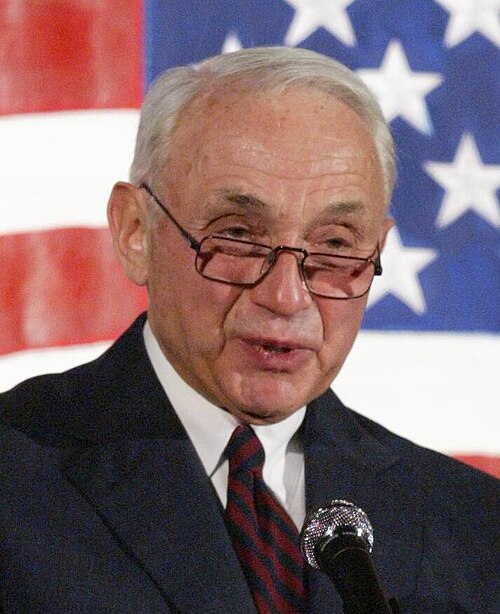
These are not fringe figures exposed by anonymous sources. These are sitting executives and billionaires being confronted with evidence in Congressional proceedings and courtrooms.
There is a structural reason for this. The system that maintained secrecy for decades depended on two things: institutional cohesion and public inattention. Both are failing simultaneously.
The faction split is visible. On one side, those who want open hierarchy — identifiable, public, operating through executive power. On the other, those whose power depends entirely on invisibility — being surfaced now through legal proceedings, whistleblower frameworks, and FOIA requests.
Each faction diverts resources from the original mission of secrecy. Their conflict with each other creates the very exposure they were built to prevent.
The geopolitical distraction is real. The apparatus that once tracked every researcher, every independent thinker, every inventor who stumbled too close — that apparatus now has its bandwidth consumed by a multipolar transition, economic competition with China, and the management of its own internal compromises.
The chain is weakened. Not broken. But weakened.
What You Can Do
You are not going to reform the intelligence community. You are not going to defund In-Q-Tel. You are not going to undo the pipeline.
But you can do something the pipeline cannot prevent: you can share what you know with the people in your life.
Every person who reads this and recognizes the pattern — Program Shutdown → Private Resurrection — is one more person who won't be surprised when it happens again.
Every person who sees the evidence tiers — who understands the difference between documented and speculative — is one more person equipped to evaluate the noise rather than be overwhelmed by it.
The damage is mitigated person by person. In conversations. In shared links. In the willingness to say: I looked into this, and here's what the actual documents show.
This is not the end of the story. It is the documented beginning.
Every claim in this piece is sourced. The evidence tiers are visible. The pipeline is public record.
What happens next depends on whether you scroll past this or share it.
Independent investigative work. No sponsors. No algorithm.
Support this research →