Money Wars
Every country that tried to leave the dollar system. Every country that was bombed back into it. The wars you’re watching are not what you’re being told.
The Architecture
Before a single bomb is dropped, the financial system decides who lives and who dies.
This is not a metaphor. It is an architecture — built over a century, refined through two world wars, and enforced today through a mechanism so effective that most people don’t know it exists.
To understand why Iran is being bombed right now — to understand why Iraq was invaded, why Libya was destroyed, why Venezuela is starving, why Cuba has been under siege for sixty years — you have to understand where the money goes.
Start at the beginning.
Jekyll Island
In November 1910, six men boarded a private railcar in Hoboken, New Jersey. They used first names only to avoid identification. Their destination: Jekyll Island, a private resort off the coast of Georgia owned by J.P. Morgan and associates.
The six men represented approximately one-quarter of the world’s wealth. They spent nine days drafting the blueprint for what would become the Federal Reserve System.
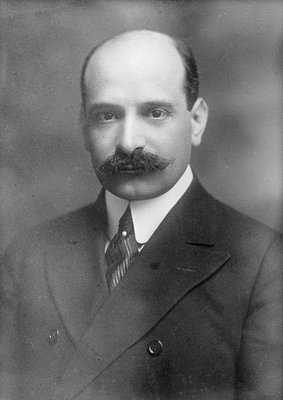
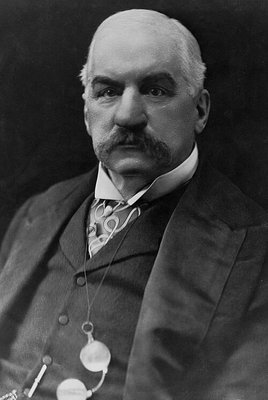
A year before the meeting, the Pujo Committee investigation found that Morgan and Rockefeller-allied interests controlled the boards of 112 corporations worth $22.2 billion — a staggering concentration of financial power. The Federal Reserve was sold to the public as the solution to this very problem.
The men who created the problem wrote the solution. And the solution gave them permanent control of the money supply.
The Federal Reserve
The Federal Reserve Act passed on December 23, 1913 — two days before Christmas, with many members of Congress already home for the holiday. It created a system of twelve regional banks with private ownership that would control the nation’s monetary policy, interest rates, and money supply.
The Fed is not federal. It has no reserves. It is a private banking cartel with a government charter.
The Central Bank of Central Banks
In 1930, the Bank for International Settlements was established in Basel, Switzerland. Officially, it exists to coordinate monetary policy among central banks. In practice, it operates above national sovereignty.
The BIS has diplomatic immunity. Its assets cannot be seized. It is not subject to the jurisdiction of any nation. Sixty-three central banks are members. If your country’s central bank is a BIS member, your monetary policy is coordinated through Basel.
Bretton Woods
In July 1944, 730 delegates from 44 Allied nations gathered at the Mount Washington Hotel in Bretton Woods, New Hampshire. They designed the post-war global financial order.
Two institutions were created: the International Monetary Fund and the World Bank. The US dollar was established as the world’s reserve currency, pegged to gold at $35 per ounce. Every other currency was pegged to the dollar.
The country that won the war got to write the rules of money.
The IMF was designed as the enforcer. When a country runs into financial trouble, the IMF offers loans — with conditions. These “structural adjustment programs” typically require: privatization of state assets, austerity measures, trade liberalization, and deregulation. Critics call it economic colonialism with a briefcase instead of a gun.
The IMF’s voting power is weighted by financial contribution. The United States holds approximately 16.5% of votes. Major decisions require an 85% threshold. This gives the US permanent veto power over the institution that sets the financial rules for the developing world.
The Petrodollar
In 1971, President Nixon closed the gold window — ending the dollar’s convertibility to gold. The Bretton Woods system collapsed overnight. The dollar was now backed by nothing.
It needed a new anchor. It found one in oil.
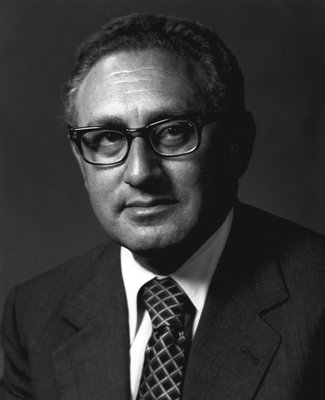
In 1973, Secretary of State Henry Kissinger brokered a deal with Saudi Arabia: the Saudis would price all oil sales exclusively in US dollars and recycle their petrodollars into US Treasury bonds. In exchange, the United States would guarantee the security of the Saudi regime.
Every country that wanted to buy oil now needed dollars first. Global demand for dollars was guaranteed — not by gold, not by economic output, but by the world’s dependence on energy.
SWIFT
In 1977, the SWIFT network went live — the Society for Worldwide Interbank Financial Telecommunication. A Belgian cooperative that provides the messaging layer for virtually all cross-border banking.
Over 11,000 financial institutions across 200+ countries. Approximately 45 million messages per day. SWIFT does not move money — it sends the instructions that tell banks to move money. But because almost every international transaction runs through it, being cut off from SWIFT is functionally identical to being cut off from the global economy.
The US dollar is used on one side of 88% of all forex transactions. Approximately 58% of global foreign exchange reserves are held in dollars. Every dollar-denominated transaction on Earth must clear through a US correspondent bank — giving the US Treasury legal jurisdiction over financial activity worldwide.
The Kill Switch
The Office of Foreign Assets Control — OFAC — housed within the US Treasury, maintains a list of individuals, entities, and entire nations that are blocked from the US financial system. The number of active sanctions designations has grown from approximately 900 in the year 2000 to over 9,400 today.
A tenfold increase in twenty years.
Secondary sanctions extend this further: any non-US bank that does business with a sanctioned entity can itself be cut off from the dollar. This forces every bank on Earth to enforce American foreign policy — regardless of what their own government thinks.
The EU has officially condemned secondary sanctions as violations of sovereignty. But no European bank has ever defied them. The cost of losing dollar access is existential.
Secret meeting → Private central bank → Supranational coordination → Dollar as world reserve → Oil as dollar anchor → Global financial kill switch.
This is the architecture. It was not built to serve nations. It was built to control them.
The Holdouts
There is a pattern. It is not hidden. It is sitting in plain sight across fifty years of foreign policy, and once you see it, you cannot unsee it.
Every country in the following list shares one thing in common: they either rejected the dollar system, proposed an alternative, or operated a central bank outside the BIS/IMF framework. Every one of them was subjected to sanctions, regime change, or military intervention.
Iraq — The Euro Switch
In November 2000, Saddam Hussein made a decision that would seal Iraq’s fate. He switched Iraq’s oil sales from US dollars to euros under the UN Oil-for-Food Programme.
The financial press noted it at the time. Few connected it to what came next.
The move was derided as irrational. The euro was worth $0.82 at the time. But between 2000 and 2003, the euro appreciated 30% against the dollar. Iraq’s $10 billion UN escrow fund, also converted to euros, gained an estimated $2–3 billion in pure currency gains. The “irrational” move was printing money.
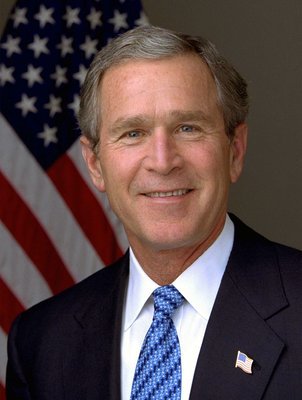
January 2002: George W. Bush names Iraq part of the “Axis of Evil.”
March 2003: The United States invades Iraq. The stated justification is weapons of mass destruction.
The Duelfer Report (2004) — the CIA’s own comprehensive investigation — concluded that Iraq had no WMDs and no active programs to produce them.
The invasion cost an estimated $2 trillion in direct appropriations. Brown University’s Costs of War project estimates the total cost, including veterans’ care and debt interest, at up to $3 trillion. Over 4,500 American soldiers died. Estimates of Iraqi civilian deaths range from 150,000 to over 600,000.
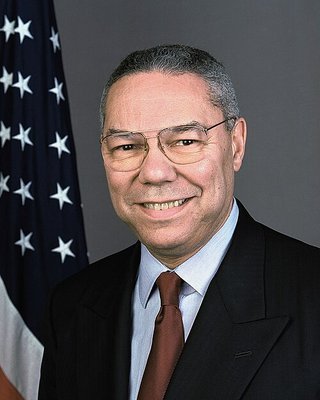
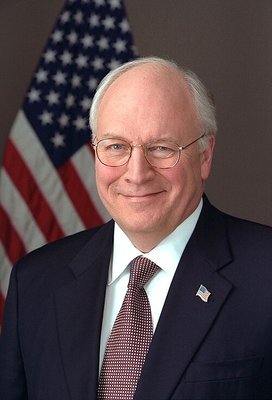
Dick Cheney, who served as CEO of Halliburton from 1995 to 2000, became Vice President. Halliburton received $39.5 billion in Iraq contracts, many no-bid. The US defense budget doubled from $316 billion (2001) to $696 billion (2010).
The oil went back on the dollar. The euro threat disappeared.
Libya — The Gold Dinar
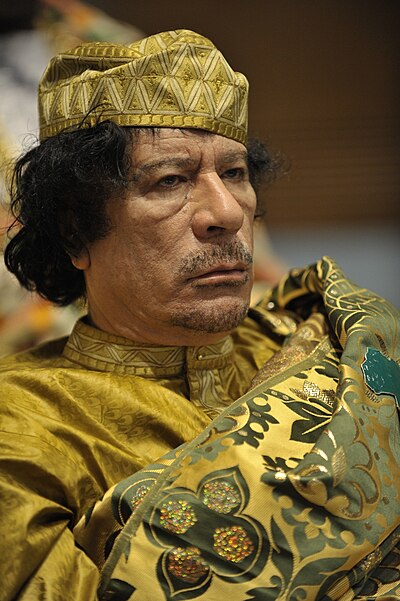
Libya under Muammar Gaddafi had zero external debt. Its central bank was state-owned, independent of the BIS. The country had the highest Human Development Index in Africa, free healthcare, free education, and a sovereign wealth fund of approximately $70 billion.
Gaddafi’s plan was to create a pan-African gold-backed currency — the gold dinar — that would replace both the US dollar and the euro in African trade. Libya had accumulated approximately 144 tonnes of gold to back it.
The gold dinar was an existential threat to France in particular. Fourteen African nations use the CFA franc — a currency created by France in 1945 and still controlled by the French Treasury. These nations must deposit 50% of their foreign exchange reserves with France. The CFA franc originally stood for “Colonies Françaises d’Afrique.”
A gold-backed alternative would have ended French monetary control over half a continent.
March 19, 2011: French jets fire the first shots. NATO intervenes under UN Resolution 1973, authorized to “protect civilians.”
October 20, 2011: Gaddafi is captured and killed. Beaten, sodomized with a bayonet, shot. Graphic footage circulates globally.
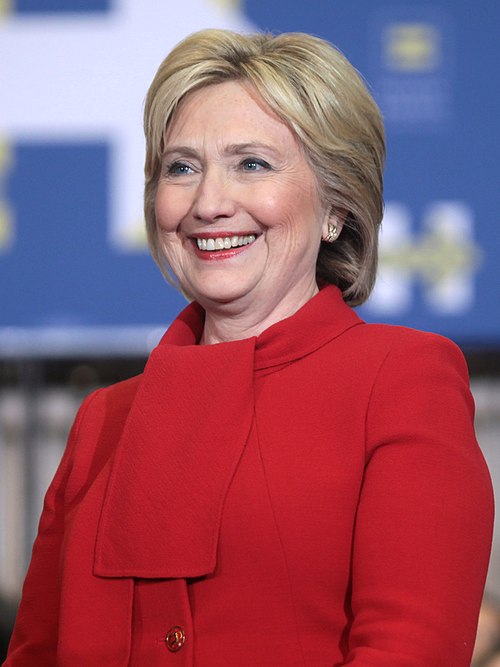
Secretary Clinton, informed of his death on camera, responds:
Here is what happened in the weeks after the rebellion began, while the war was still being fought, while Gaddafi still controlled most of the country:
The rebels established a new central bank.
This is virtually without precedent. Rebel movements do not establish central banks in the opening weeks of a civil war. As one economist noted: “I have never before heard of a central bank being created in just a matter of weeks out of a popular uprising.”
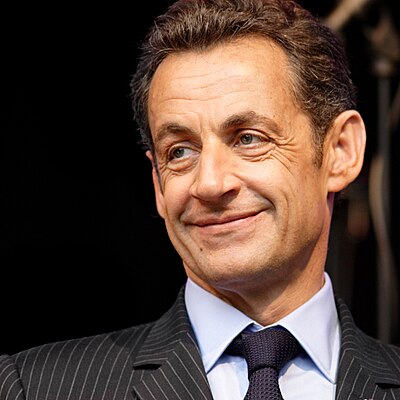
Nicolas Sarkozy, who led the charge for intervention, was later convicted of receiving €50 million in illegal campaign financing from Gaddafi for his 2007 presidential election.
Today, Libya is a failed state with two competing governments, open-air slave markets documented by CNN in 2017, endemic human trafficking, and no functioning institutions. The country with the highest development index in Africa was reduced to a place where human beings are sold for $400.
The gold dinar died with Gaddafi. The CFA franc survived.
Venezuela — The Last Oil Holdout
Venezuela has the world’s largest proven oil reserves. Under Hugo Chávez, the country nationalized its oil industry, rejected IMF structural adjustment, and began trading oil outside the dollar system.
In 2002, a coup briefly removed Chávez from power. The US recognized the coup government within hours. Chávez was restored within 48 hours by popular mobilization.
When the coup failed, the financial war began. By 2019, OFAC had designated PDVSA — Venezuela’s state oil company and the source of 95% of export earnings. Oil production collapsed from 2.3 million barrels per day to roughly 400,000.
In 2019, the Bank of England refused to return $1.2 billion in Venezuelan gold reserves held in its vaults. The UK recognized Juan Guaidó — a man who had never won a presidential election — as the “legitimate president” and used that as legal justification to freeze a sovereign nation’s gold.
Cuba — Sixty Years of Siege
The US embargo on Cuba has been in effect since 1962 — the longest economic embargo in modern history. Its stated purpose was written in plain language. A declassified State Department memorandum from Deputy Assistant Secretary Lester Mallory (April 6, 1960) reads:
The Helms-Burton Act (1996) codified the embargo into law and extended it extraterritorially — meaning the US punishes other countries for trading with Cuba. Cuba is not a member of the IMF or the World Bank — one of the few nations on Earth excluded from both.
Every year since 1992, the UN General Assembly has voted to condemn the embargo. The vote is typically 185 to 2. The entire world versus the United States and Israel.
The Pattern
Line them up.
In 2007, retired four-star General Wesley Clark — former NATO Supreme Allied Commander — described a memo he was shown at the Pentagon shortly after September 11, 2001:
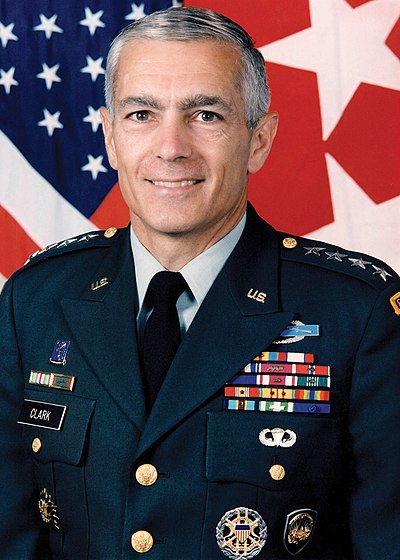
Six of the seven countries on Clark’s list have since been subjected to invasion, regime change, proxy war, or devastating sanctions. The seventh — Iran — is being bombed as you read this.
The Playbook
The pattern didn’t start with Iraq. It didn’t start with the War on Terror. The operational playbook — the fusion of intelligence, banking, and military force into a single covert machine — was written decades earlier.
It was called Iran-Contra. And it never ended.
The Original Sin — Iran, 1953
In 1951, Iranian Prime Minister Mohammad Mosaddegh nationalized Iran’s oil industry, ending British Petroleum’s exclusive control. He was democratically elected. He was Time magazine’s Man of the Year in 1951.
In 1953, the CIA and MI6 executed Operation TPAJAX — overthrowing Mosaddegh and installing Shah Mohammad Reza Pahlavi, who would rule as a Western-aligned dictator for 26 years.
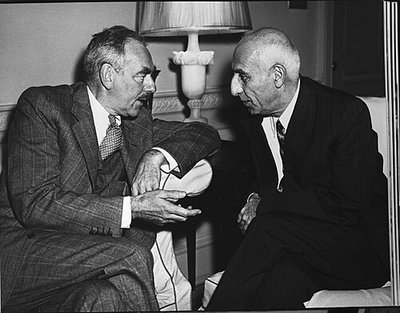
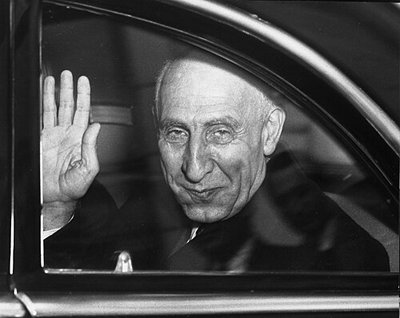
The 1979 Iranian Revolution that overthrew the Shah — the revolution that created the Islamic Republic that the US has been fighting ever since — was a direct consequence of the 1953 coup. The entire arc of US-Iran hostility traces back to the CIA overthrowing a democracy to protect oil profits.
Iran has not invaded another country in over 200 years. The United States overthrew its government within living memory.
Iran-Contra — The Blueprint
In the 1980s, the Reagan administration ran a covert operation that fused everything: arms trafficking, drug running, illegal banking, intelligence operations, and off-the-books foreign policy into a single shadow apparatus.
They sold weapons to Iran (which was under an arms embargo), used the profits to fund the Contra rebels in Nicaragua (which Congress had explicitly prohibited), and used CIA-connected drug trafficking networks to supplement the funding.
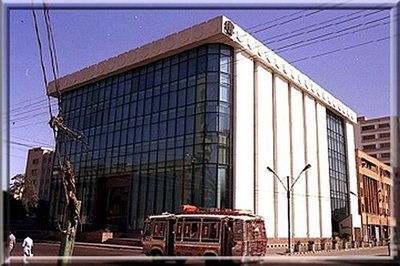
The banking vehicle was BCCI — the Bank of Credit and Commerce International — which the CIA used to launder money, fund covert operations, and maintain financial relationships with intelligence assets worldwide. BCCI laundered over $15 billion before its collapse in 1991.
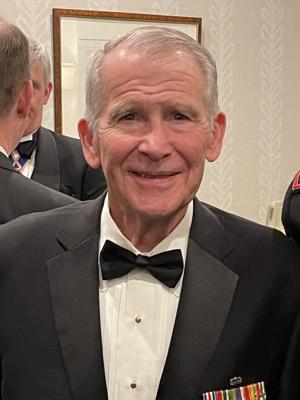
Oliver North’s declassified notebooks — 2,000 pages released in 1990 — contain entries documenting his awareness that aircraft used in the Contra resupply program had been “used at one time to run drugs.”
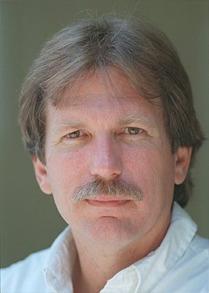
Journalist Gary Webb documented the cocaine pipeline in his 1996 “Dark Alliance” series for the San Jose Mercury News: Contra-linked dealers funneled crack cocaine into American cities, and the profits flowed back to the CIA-backed rebels.
The CIA orchestrated a media campaign to discredit Webb. He was found dead in 2004, ruled a suicide, with two gunshot wounds to the head.
Iran-Contra was not an aberration. It was a proof of concept. The apparatus demonstrated that intelligence agencies, banks, drug networks, and military operations could be fused into a single covert machine that operated outside democratic oversight.
BCCI was shut down in 1991. But the operational model — covert finance, offshore banking, parallel foreign policy — was not shut down. It was refined.
Libya to Syria — The Rat Line
On September 11, 2012, the US compound and CIA annex in Benghazi, Libya were attacked. Ambassador J. Christopher Stevens and three other Americans were killed.
The official explanation focused on a spontaneous protest over a YouTube video. Clinton’s private emails told a different story. She emailed her daughter that night: “Two of our officers were killed in Benghazi by an al Queda-like group.” She told the Egyptian Prime Minister the next day: “We know that the attack in Libya had nothing to do with the film.”
The deeper question was never adequately answered in public: what was the CIA doing in Benghazi? The CIA annex housed far more personnel than the diplomatic compound. Investigative journalist Seymour Hersh reported in the London Review of Books that the CIA was managing a covert weapons pipeline — a “rat line” — funneling weapons from Libya’s post-Gaddafi arsenals through Turkey into the hands of Syrian rebel groups.
This is the playbook: overthrow a government, seize the weapons, funnel them into the next theater. Each war feeds the next. Each destroyed state becomes a staging ground for the destruction of the next holdout.
The Broadcast
Every war on this list was sold to the public with a different label. Not one was sold as what it was.
The label changes. The pattern doesn’t. And the one thing never mentioned on the broadcast is the one thing they all have in common: the money.
Manufacturing the Narrative
This is not speculation about how media works. It is documented infrastructure.
Operation Mockingbird: The CIA maintained relationships with over 400 journalists at every major American news organization during the Cold War. This was confirmed by the Church Committee in 1975 — a Congressional investigation into intelligence abuses.
The Iraq Template
The Iraq War was the clearest case study in manufactured consent. The Project for the New American Century — a think tank whose signatories included Dick Cheney, Donald Rumsfeld, Paul Wolfowitz, and Jeb Bush — published a document in September 2000 called “Rebuilding America’s Defenses.” It argued for American military dominance and regime change in Iraq, but acknowledged that the transformation would be slow “absent some catastrophic and catalyzing event — like a new Pearl Harbor.”
One year later, they got their Pearl Harbor.
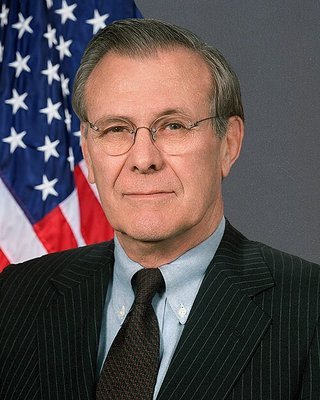
On September 10, 2001 — one day before the attacks — Secretary of Defense Donald Rumsfeld announced that the Pentagon could not account for $2.3 trillion in transactions.
By the next morning, that story was gone. It has never returned to the front page. The Pentagon has since failed six consecutive audits (2018–2023). Trillions remain untracked.
The gap between the broadcast and reality is not a flaw in the system. It is the system. Public narratives are managed to manufacture support for interventions that serve financial and strategic interests. When the public narrative collapses — as it did with Iraq’s WMDs — it collapses too late. The objective has already been achieved.
The Last Holdout
Iran is not a peripheral target. It is the endgame.
Iran has the world’s fourth-largest proven oil reserves. Its central bank is not a member of the BIS. It was excluded from SWIFT in 2012, briefly reconnected under the nuclear deal, and excluded again in 2018. It has been under some form of US sanctions for over four decades. And it is now a founding member of the expanded BRICS bloc.
Every characteristic that got Iraq, Libya, and Syria destroyed, Iran possesses. The only difference is scale.
The Deal That Was Broken
In 2015, Iran signed the Joint Comprehensive Plan of Action — the nuclear deal — with the P5+1 nations. Iran agreed to limit uranium enrichment, reduce centrifuges, and allow international inspections. In exchange: sanctions relief.
The IAEA confirmed more than ten times that Iran was in full compliance.
In May 2018, President Trump unilaterally withdrew the United States from the deal. Iran was complying. The US broke it anyway.
The withdrawal demonstrated something that resonated far beyond Iran: a negotiated agreement with the United States can be unilaterally voided by the next president. If the most powerful country on Earth will not honor its own signatures, what is the incentive to negotiate?
Financial Warfare
Iran was first cut from SWIFT in March 2012. Approximately 30 Iranian banks were disconnected — the first time in SWIFT’s history that an entire country’s banking sector was severed.
The impact was immediate. Oil exports dropped from 2.5 million barrels per day to roughly one million. The Iranian rial lost approximately 80% of its value. Iran was forced into barter arrangements — oil for goods, hawala networks, cryptocurrency, and eventually yuan-denominated trade with China.
The Escalation
What the Broadcast Won’t Tell You
The dominant narrative frames this as a nuclear crisis and a terrorism problem. Those elements are real. But they are not the whole story, and they are not the structural driver.
Iran sells oil to China in yuan. It joined BRICS in January 2024. It operates an oil bourse that trades in non-dollar currencies. Every barrel of Iranian oil sold outside the dollar system is a brick removed from the foundation of US financial hegemony.
Approximately 20 million barrels of oil per day flow through the Strait of Hormuz — 20% of global consumption. If Iran closes it, oil prices spike to $150–$300 per barrel and the global economy enters recession. This is Iran’s deterrent, and it is the reason Iran has not been invaded the way Iraq was.
A peaceful, sanctions-free Iran trading oil in multiple currencies would be a structural challenge to the dollar system. A hostile, sanctioned Iran paradoxically reinforces dollar dominance — by demonstrating the consequences of leaving the system.
Context the broadcast omits:
- The US overthrew Iran’s democratic government in 1953 to protect oil profits (CIA declassified, 2013)
- The US backed Iraq’s invasion of Iran (1980–1988), including when Iraq used chemical weapons
- The US shot down Iran Air Flight 655 in 1988, killing 290 civilians, and never formally apologized
- The US broke the nuclear deal while Iran was in verified compliance (2018)
- Iran has not invaded another country in over 200 years
The Bigger Picture
Iran is not alone. The BRICS bloc now represents roughly 45% of the world’s population. China and Russia settle bilateral trade in yuan and rubles. Saudi Arabia has begun accepting yuan for oil. Central banks worldwide purchased over 1,000 tonnes of gold per year in 2022–2023 — record levels — diversifying away from dollar reserves.
The dollar’s share of global reserves has declined from 72% in 2000 to 58% today. Each use of the sanctions weapon accelerates the construction of alternatives. As a former US Treasury official acknowledged: there is a “risk of diminishing returns” from overuse.
The Ledger
Follow the money. Not the rhetoric. Not the flags. Not the five-minute segment on cable news. Follow the money.
Who Profits
The US defense budget for fiscal year 2024 was $886 billion. The Pentagon requested $13.4 billion for AI alone. The US maintains approximately 800 overseas military bases in more than 70 countries.
This infrastructure requires justification. Threat narratives sustain budgets. This is not conspiracy — it is institutional incentive structure.
The revolving door spins:
- Dick Cheney: CEO of Halliburton (1995–2000) → Vice President → Halliburton receives $39.5 billion in Iraq contracts
- Donald Rumsfeld: Secretary of Defense → Announces $2.3 trillion untracked at Pentagon (Sept 10, 2001)
- Lloyd Austin: Raytheon board member → Secretary of Defense (recused from Raytheon matters)
- The F-35 Joint Strike Fighter: $1,700 billion estimated lifecycle cost — the most expensive weapons program in history
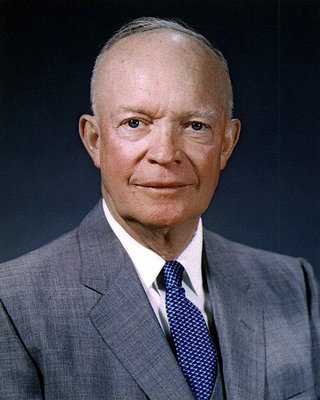
On January 17, 1961, President Dwight D. Eisenhower — a five-star general who commanded D-Day — gave his farewell address. His original draft used the phrase “military-industrial-congressional complex.” The word “congressional” was removed before delivery.
The Coordination Layer
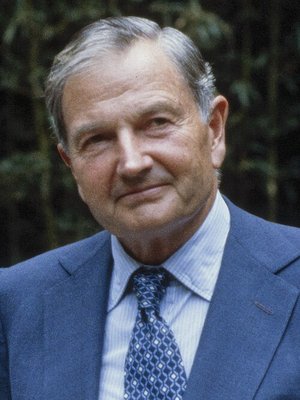
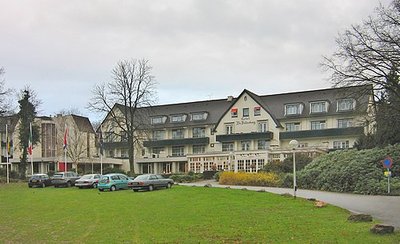
Above the defense contractors and the banks sits a coordination layer. The Council on Foreign Relations, founded in 1921, has included virtually every Secretary of State and CIA Director for a century. The Trilateral Commission, co-founded by David Rockefeller and Zbigniew Brzezinski in 1973, fosters alignment between North American, European, and Japanese elites. The Bilderberg Group convenes 120–150 of the most powerful people in finance, government, and media annually under Chatham House Rule.

These are not secret societies. They are documented coordination mechanisms. Their membership lists are public. Their policy influence is traceable.
What This Means
The wars you are watching — the ones on your screen right now — are not what you are being told. They are not about nuclear weapons, or terrorism, or humanitarian concern. Those are real elements that are real to the people suffering through them. But they are not the engine.
The engine is a financial architecture built over a century that requires global compliance to function. Countries that comply are clients. Countries that don’t are targets.
The system is documented. The Fed’s private ownership is public law. The BIS’s sovereign immunity is treaty-based. The petrodollar is declassified. SWIFT exclusion is EU regulation. The sanctions list is published by Treasury. The Wesley Clark memo is on video. The Clinton email is FOIA-released.
None of this is hidden. It is simply never assembled into a single picture on the broadcast.
You cannot reform the Federal Reserve from your couch. You cannot defund the Pentagon with a tweet. But you can do something the broadcast cannot prevent: you can refuse to accept the narrative without examining the ledger.
Every person who reads this and asks “who profits?” before accepting the next justification for the next war is one more person the broadcast cannot use.
Every person who sees the pattern — holdout → sanctions → regime change — is one more person who will recognize it when it happens again.
Because it will happen again. Unless enough people see the ledger.
This is not the end of the story. It is the end of the broadcast version.
Every claim in this piece is sourced. The evidence tiers are visible. The pattern is public record. The ledger is open.
What happens next depends on whether you scroll past this or share it.
Independent investigative work. No sponsors. No algorithm.
Support this research →